
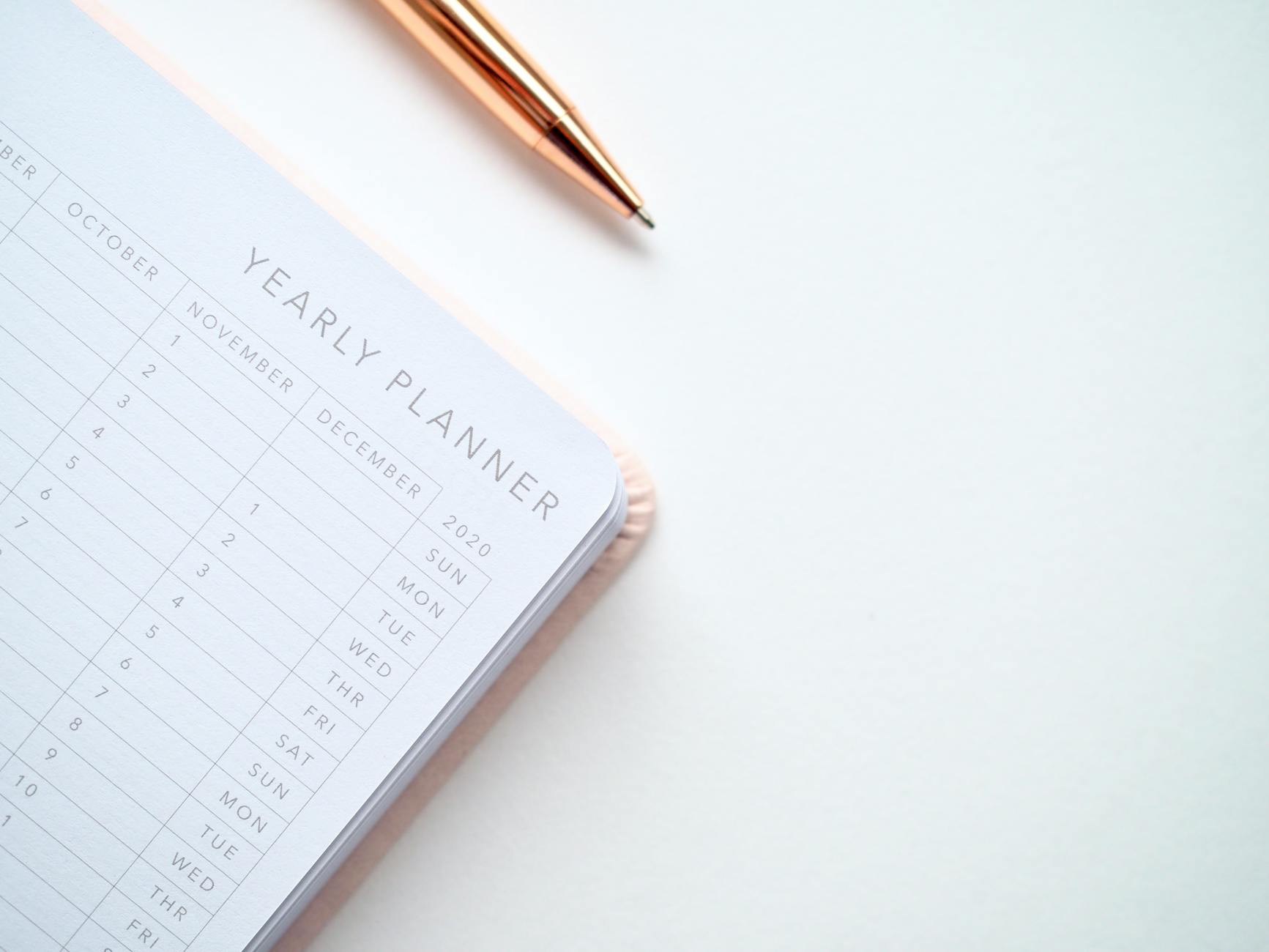
A 3-step guide to declutter your calendar and your brain to have a great 2026.
Raise your hand if you’ve ever been personally victimized by your own calendar.
That was me last year. My calendar was full, and my to-do list was never-ending. Yet at the end of the year, I felt like I hadn’t accomplished anything. Of course, that’s not true. But, when I looked at my goals for the year, I realized I hadn’t crossed many off. Looking back, I think that was because I filled my days with tasks just so I could show everyone how productive I was. In the end, though, I didn’t have much to show for it. Which brings me to the annual life edit.
I know, a January blog post about redesigning your year? Groundbreaking. But unlike most New Year’s resolution-focused posts, this Annual Life Edit is going to give you real, tangible ideas. Ones that I myself use and will help you have the best 2026 possible.
Intentionally Audit Your Calendar
The first step is to intentionally audit your calendar. What does that mean?
To start, take a look at what filled your calendar last year. Whether you’re a Google Calendar girl or a physical planner fan like me, set some time aside. Go through the past year of appointments, meetings, and more. What do you notice? Maybe you realize you went weeks without any self-care or true rest. You might have also scheduled 6 AM workout classes you never actually attended. Try to find at least three or four key takeaways and consider how to implement new calendar rituals this year.
Maybe last year you realized that you were way behind on scheduling doctor appointments. For this reason, you now decide to block a 30-minute period every Wednesday afternoon to make those phone calls. If you notice that you have a free Friday afternoon once a month, think about how you would use it. If it felt wasted, take that time to book a fun hobby like a dance class. Alternatively, consider a self-care ritual, such as a massage. This also gives you something to look forward to!
For me, this year is about planning less. I no longer decide my Peloton workout days in advance. I don’t write them in my planner. I just wake up and do what feels good that day. I don’t write things that I know I won’t forget, like work – obviously, I have to work! – and have kept my planner much more minimal. This year, there are fewer habit-tracking and planning pages and more of a high-level overview.
Energy Mapping
The second step is to energy map. This is something I’ve only learned about recently, but I’m obsessed!
The idea of energy mapping has two parts. One, finding what times of day you have the most or least amount of energy. Two, finding what tasks drain you versus energize you. This is also where auditing your calendar comes in handy!
First, pick a week – preferably a recent one where you’ll remember the most detail – to be your guide. From there, try to assign energy levels to each hour of the day and each day of the week. For example, maybe Monday mornings at 10 AM are a level 5 – you have so much energy – while Thursday afternoon at 3 PM is a level 1 – you are dragging.
Then, take a look at what tasks and meetings you had during that week. Think about which ones felt like energy vampires and which ones felt like you’d just had three cups of coffee.
From there, you can plan your day to maximize your energy. I realize that some things, like weekly team meetings, are out of your control, but as much as you can, try to assign those draining tasks to times when you do have more energy. Meanwhile, those energizing tasks can maybe be done during your slower energy phase. This way, it doesn’t feel quite so tedious.
Energy mapping can be a great tool to help you get the most out of each and every day. To learn more, subscribe to my newsletter so you can get my free energy mapping guide!
Set Your Weekly Rhythm
The last step is to set your weekly rhythm. By intentionally auditing your calendar and energy mapping, you’ve already done the hard work!
Now that you have a better idea of what really needs to be on your calendar and how your energy looks throughout the week, you can set a rhythm that works for you. Maybe you’ve realized that, as much as possible, you want Mondays to just be your deep work day – where you get the bulk of your detail-oriented projects done. Meanwhile, maybe Wednesdays become your ‘around the house’ day, and Sundays are your self-care day. The point is to find what works for you.
I realize that having the same setup each week might sound boring and monotonous. However, I find that when I know what is coming next, I have much less decision fatigue and anxiety. I am also much more likely to actually get things done if I’ve already blocked out time. I still have some freedom in that, by deciding Tuesday afternoons are my “creative time,” I can choose what it is I’m creating. Plus, you can always improvise and adjust if needed. The point is to give yourself a blueprint that works with you, not against you.
Creating Strategic Softness
This annual life edit is a way for you to design your days, weeks, and even months in a way that works best for you. By completing this annual life edit, you are one step closer to creating your version of strategic softness. In this, systems are designed to help you get softer and become more aligned. The point is not to constrain you or become another item on your to-do list.
Before, I would set goals and plan my day in a way that had me feeling burned out by February. Now, I build systems that protect my peace. I hope that this helps you have the best 2026!
What steps do you take at the start of each year to set yourself up for success? Share them with me!
One response to “Declutter Your Year: A 3-Step Annual Life Edit”
[…] way more drained than inspired, is just as toxic as a person who has a new drama every other week. Auditing your calendar to make sure that the things you’re filling your days with are aligned with where you are and […]